SaaS · Quickplus
Queue & Token SaaS
One webhook, every screen updated.
A real-time token and queue system for service centres, triggered by the CRM, that grew into a multi-tenant SaaS with Stripe subscriptions.
Role
Lead developer, backend and frontend
Period
Jul 2026 – Oct 2026
Stack
- Node.js
- Express
- Socket.io
- Prisma
- PostgreSQL
- React
- Vite
- Stripe
- Docker
- nginx
Highlights
What stands out.
CRM-triggered tokens
A lead created in the CRM issues a numbered token and routes it to the right counter.
Real-time screens
Reception, counters and the lobby TV update instantly over WebSockets.
Multi-tenant SaaS
Tenant-scoped data, counters and settings behind a subscription gate.
Stripe billing
Plans, checkout, webhooks, a customer portal and branded invoice PDFs.
The problem
Service centres register every visitor as a lead in the CRM. The business wanted a token issued the moment that happens, routed to the right agent, printed at reception and called on the lobby screen, without extra steps for staff.
What I built
- CRM-triggered tokens. A webhook from the CRM creates a ticket as soon as a lead is registered at reception. A shared secret protects the webhook, and a sync service pulls staff and services from the CRM.
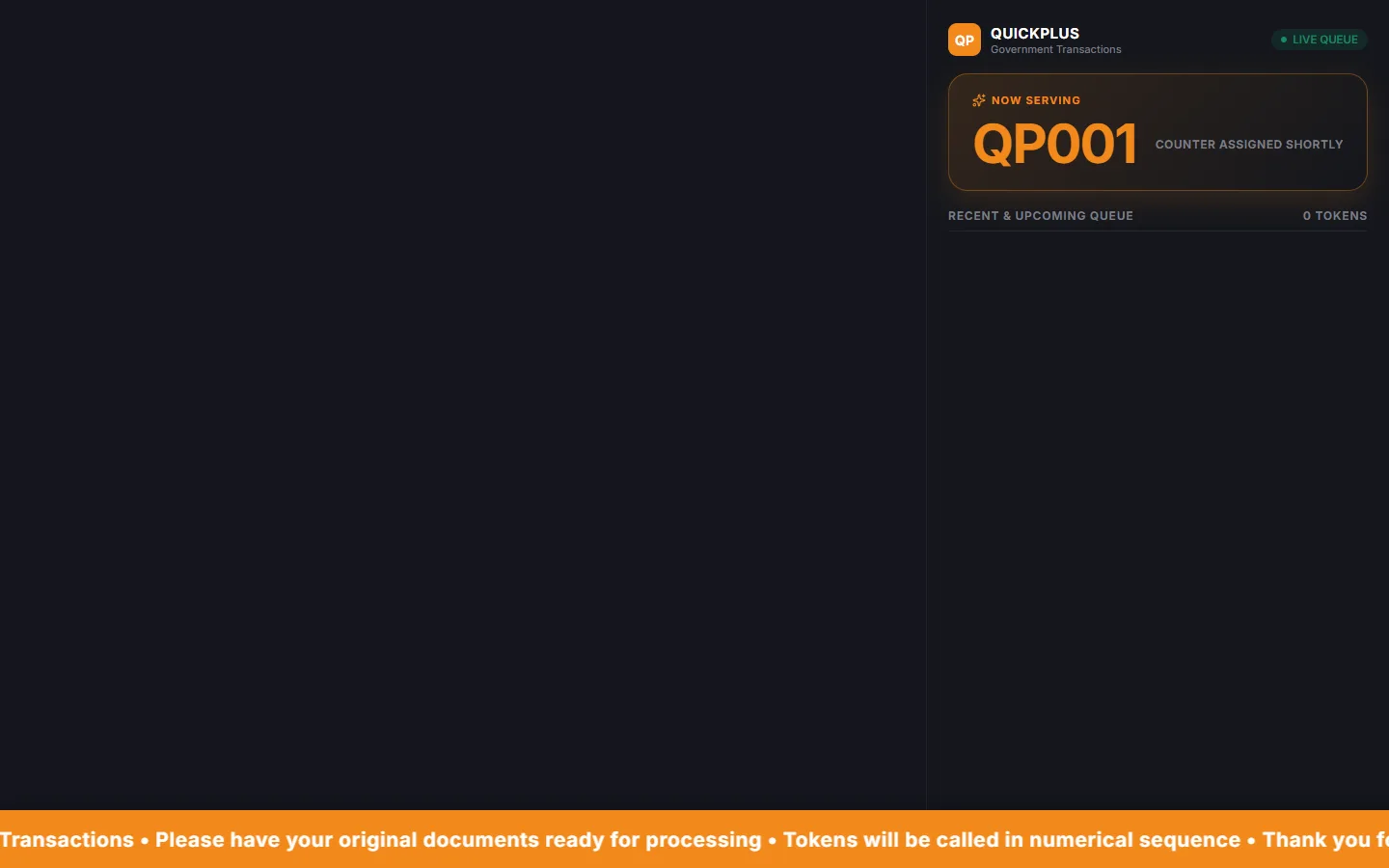
- Real-time screens over Socket.io. New-ticket, status-change and unmapped-agent events feed three screens: the reception feed with walk-in tokens and 80 mm slip printing, the agent-to-counter mapper, and the lobby "now calling" board.
- Multi-tenant SaaS. Tenant-scoped data, per-tenant ticket counters and settings, and a login gate that checks the subscription is valid.
- Stripe billing. Plans, checkout sessions, verified webhooks, a customer portal, cancellation and invoice history, with invoice PDFs rendered by Puppeteer and sent by email.
- Super-admin console. Subscribers, status control and invoices.
My role
I was the lead developer on the Node.js API and the React frontend, and planned the move from a single-office tool to a SaaS in a written spec first.
Engineering highlights
- From one office to a SaaS. Tenant isolation, a subscription gate in the login flow and billing were added without changing the existing reception, counter and TV workflow.
- Securing endpoints. Admin endpoints that were open on the office network now need an API key or JWT, and the CRM webhook is checked against a shared secret.
Lobby TV "now serving" display
How it fits together
The architecture.
The CRM sends one webhook. The ticket service numbers the token, picks the counter and stores it in PostgreSQL through Prisma, then pushes events over Socket.io to every connected screen. Billing runs through Stripe with verified webhooks.
Results
By the numbers.
Tech specs
What it’s built with.
- Backend
- Node.js, Express 4, Socket.io 4, JWT, bcrypt
- Data
- Prisma 5, PostgreSQL
- Payments
- Stripe Checkout, webhooks, customer portal
- Documents
- Puppeteer HTML-to-PDF invoices, Nodemailer
- Frontend
- React 19, Vite, React Router 7, socket.io-client
- Ops
- Docker, Docker Compose, nginx