E-commerce · Personal project
Velvet Metric
Stripe in, Printify out, admin in the middle.
A print-on-demand clothing store with a Next.js storefront, an admin panel for approving orders, and fulfilment through the Printify API.
Role
Sole developer (architecture, design system, backend, DevOps)
Period
Jun 2026 – Oct 2026
Stack
- Next.js
- React
- TypeScript
- Tailwind CSS
- Prisma
- PostgreSQL
- Redis
- Clerk
- Stripe
- Printify
- Docker
- DigitalOcean
Highlights
What stands out.
Full storefront
Server-side filtering, quick view, cart drawer, wishlist, accounts and a journal.
Approval before production
Paid orders wait on hold at the printer until an admin approves them.
Monorepo
Storefront and admin share one database package and one domain package.
Secure by default
Role checks in every admin action and sanitised rich text on save and on render.
The problem
A print-on-demand clothing brand needed a store with real filtering, Stripe checkout and a safe path from payment to the printer, with a human approval step before anything goes into production.
What I built
- Storefront. Shop with server-side filtering, sorting and pagination; category and product pages; quick view; cart drawer; a wishlist kept across visits; account pages; a journal; policy pages; and a hardened contact form.
- Checkout and fulfilment. Shipping region in the cart, Stripe Checkout, a webhook that marks the order paid, then an order created at Printify on hold. An admin approves it for production, and tracking syncs back as shipped and delivered. Failed submissions show their error and can be retried.
- Admin panel. Orders, the production approval queue, products and variants synced from Printify, categories, a blog editor with sanitised rich text, store settings and contact messages.
- SEO. Sitemap, robots, Open Graph previews and product structured data.
- Media. Image uploads to DigitalOcean Spaces, with a local fallback.
My role
It's my own project: I designed and built everything, from the monorepo and the design system to the fulfilment flow and the Docker setup.
Engineering highlights
- Monorepo refactor. Split two template-based apps into workspaces with shared packages, so order and fulfilment logic exists in one place only.
- Removing the template. Took out all template branding, demo pages and fake widgets, and replaced them with a documented design system, rolled out page by page.
- Data integrity. Order items keep a snapshot of price and product at purchase time; indexes, stable category slugs and wishlist foreign keys added.
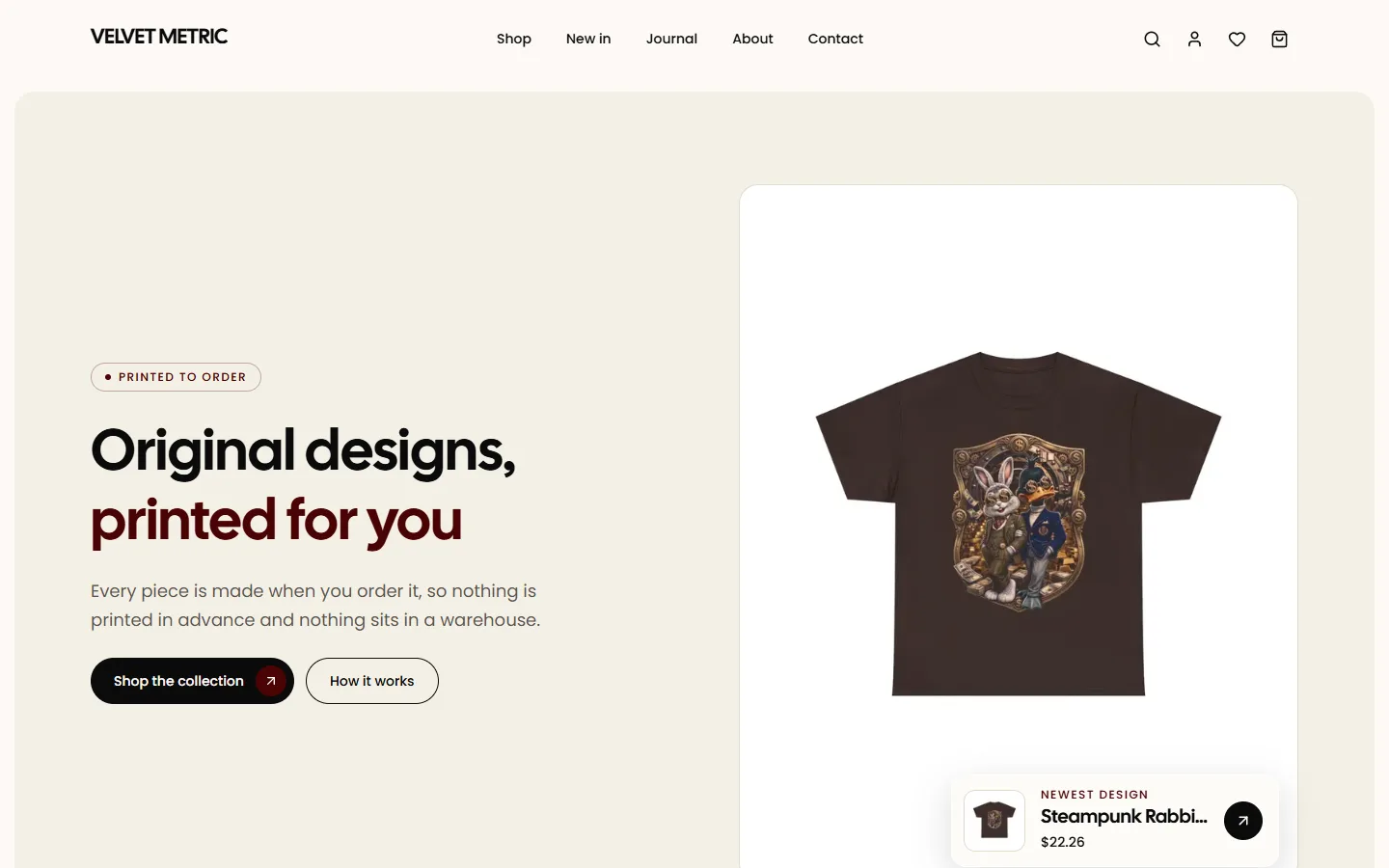
Home page
How it fits together
The architecture.
An npm-workspaces monorepo: two Next.js 16 apps (storefront and admin) share a Prisma database package and a domain package holding the Printify client, fulfilment, shipping and order-status logic. Stripe and Printify talk back through webhooks.
Results
By the numbers.
Tech specs
What it’s built with.
- Frontend
- Next.js 16, React 19, TypeScript (strict), Tailwind CSS, custom design system
- Backend
- Route handlers and server actions, shared domain package
- Data
- Prisma 7, PostgreSQL, Redis
- Auth
- Clerk, with an admin role check in every server action
- Commerce
- Stripe Checkout and webhooks, Printify API
- DevOps
- Docker Compose (Postgres, Redis, migrate job, two apps), DigitalOcean Spaces
